Three regions, designed in full.
Each Orchid City below is a complete design for a real region, drawn to its own climate, water, and culture. They show the framework adapts anywhere, from reclaimed polder to river delta.
One framework, adapted to three very different places.
The same method, three different places.
The same approach reads each place on its own terms, then designs a city that fits it. Here is what changes from one continent to the next, and what stays the same.
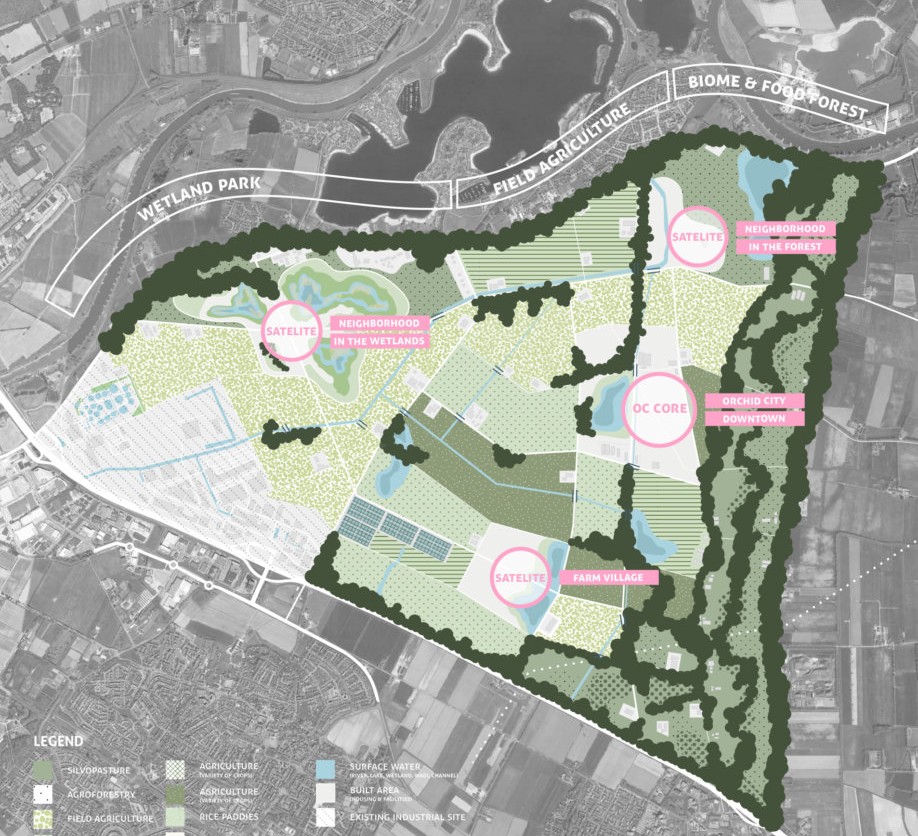
The Woods
Rewilding woven through regenerative farming, greenhouses, and higher learning on former polder land. Built for a moderate sea climate, for research, and for people who could not otherwise afford to live well. About 5,000 residents across 1,845 hectares.
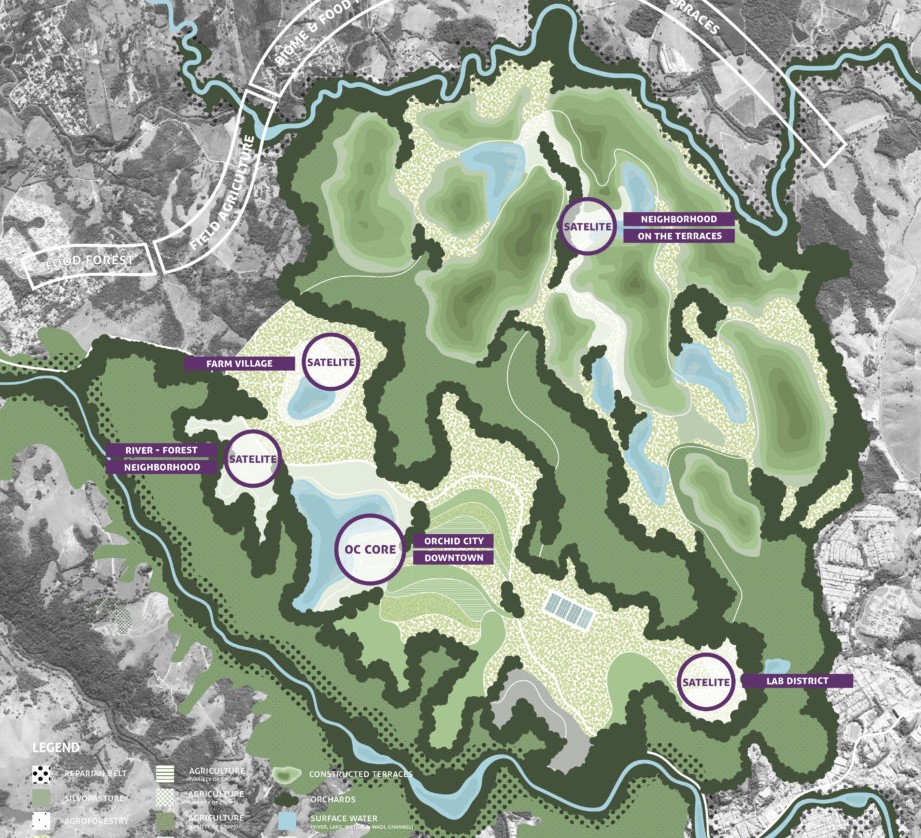
The Valley
A lakeside center held by terraced farms, river-forest neighborhoods, constructed wetlands, orchards, and food forests in the inland hills of the Campinas region. Built around safety, belonging, and the return of land and water to health. About 5,000 residents across 2,165 hectares.
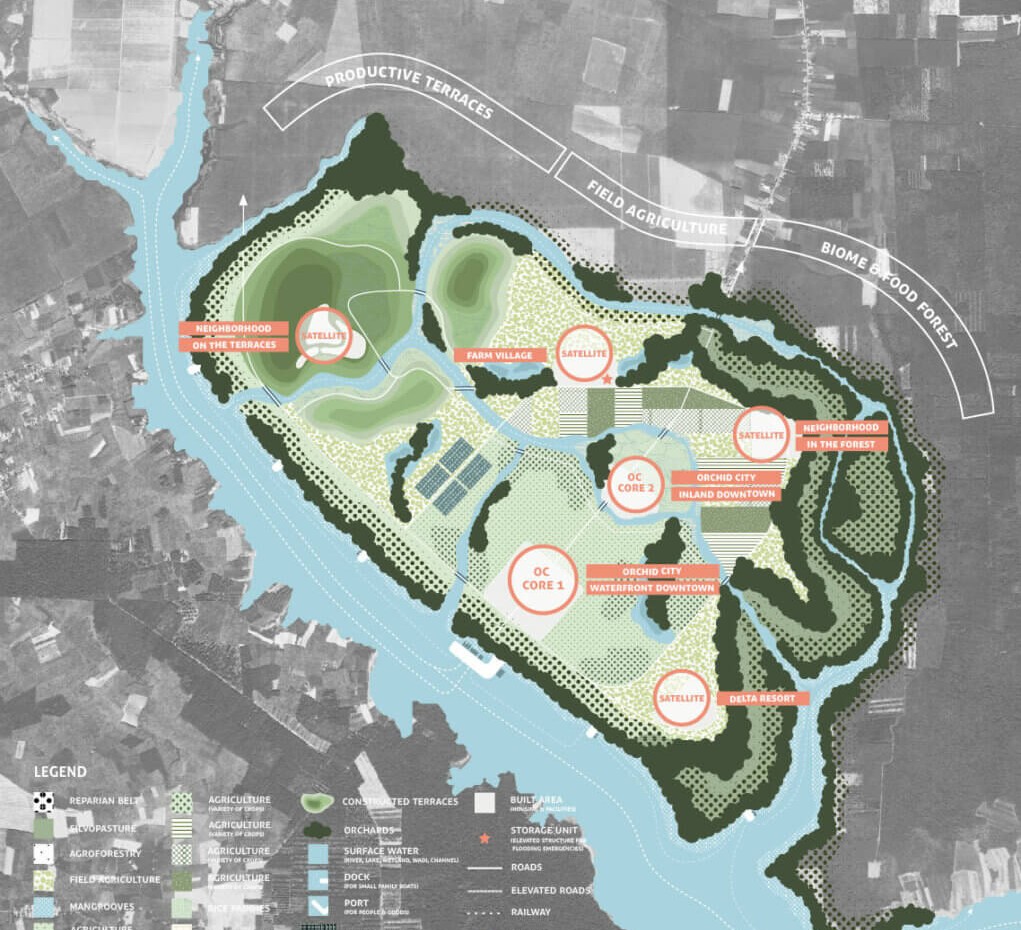
The Delta
Homes on stilts and raised ground along a mangrove waterfront, with a floating market, rice terraces, fish ponds, and aquaculture. Built to live with the water in a tropical delta, and to keep good work close to home. About 5,000 residents across 1,474 hectares.
Walk into each city.
These are designs for real ground, ready to build.