Cities that regenerate the places they stand.
Orchid City is a method for building a city that produces more energy, water, food, and biodiversity than it consumes, on the land it actually occupies.
The conventional city takes from its surroundings and gives almost nothing back.
Cities sit at the center of the climate, water, and housing crises at once. The usual response is to make the same city slightly less harmful. That is not enough, and it never was. The next two billion urban residents arrive within thirty years. Built the conventional way, they deepen every shortfall below.
of the world's energy is consumed in cities, which emit more than 70% of its carbon.
cities already faces a severe water shortage, and the number rises every year.
more people will lack a decent, affordable home by 2030, most of them in cities.
A city that returns more than it takes: energy, water, food, and habitat.
Symbiosis in Development reads a place, then designs for it.
Hand it a real place. It returns a city that pays for itself and gives more than it takes.
Symbiosis in Development (SiD) is Except's open-source methodology, refined over twenty-five years of practice. It is not a style and not a template. It is a way of seeing a place whole: climate, water, soil, economy, energy, and culture treated as one connected system rather than a list of separate problems.
SiD reads those conditions for a specific site, then cross-references decades of research and several hundred proven regenerative solutions. The output is a city blueprint shaped to that place: energy, water, food, waste, transport, work, learning, and housing designed together. The result is financially grounded and net-positive, not a showcase built once and copied everywhere.
The same method suits a Dutch polder or a tropical delta, a town of 500 or a city of 100,000. Each blueprint is different because each place is different.
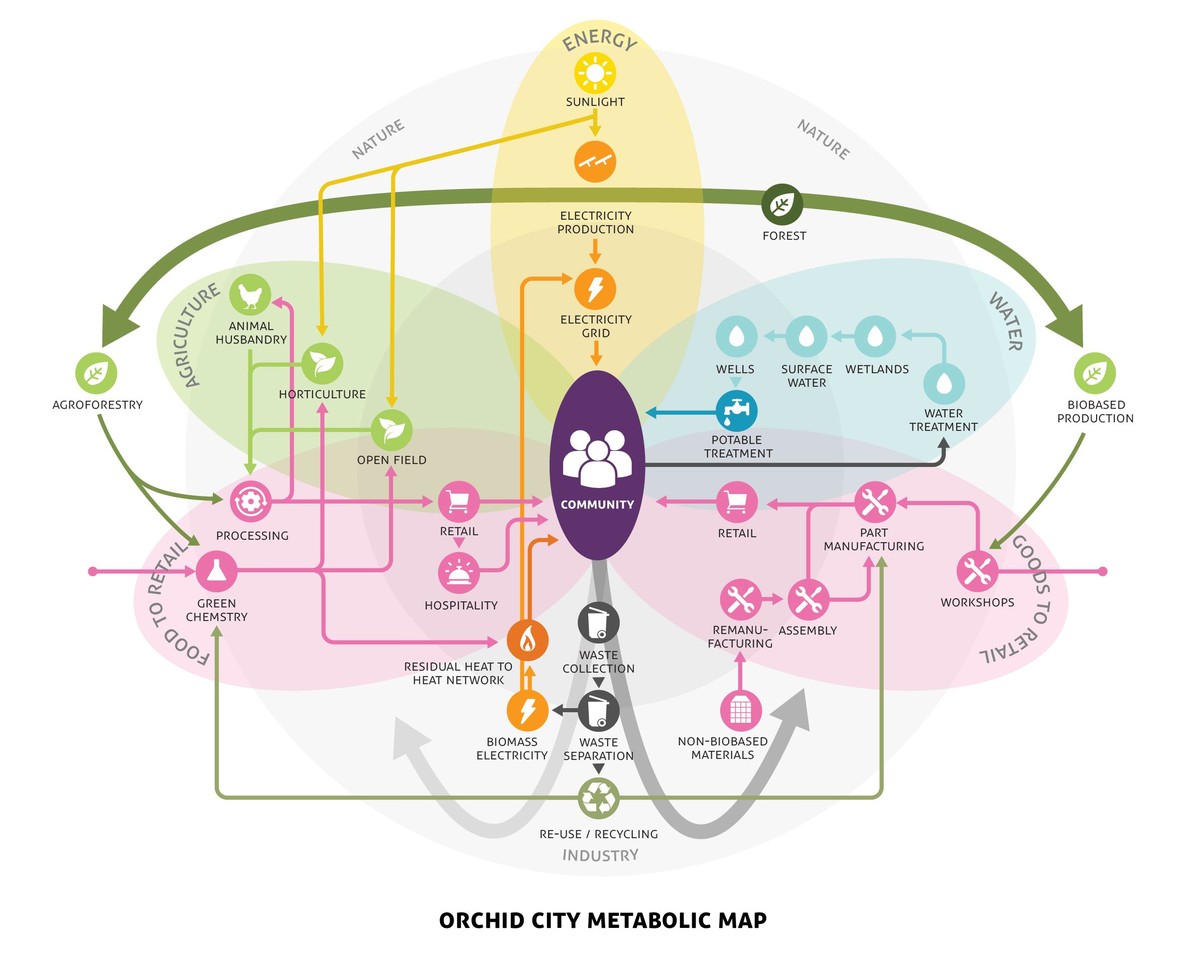
Every blueprint meets three tests: resilience, autonomy, and harmony.
Resilience
A city that absorbs shocks and keeps running. Car-free neighborhoods, local solar, wind, and storage, and landscapes that hold floodwater. When the climate, the economy, or a supply chain falters, an Orchid City keeps its people housed, fed, and connected. Its energy carries almost no marginal cost, so the lights stay on whatever happens to the grid.
Autonomy
Self-reliant in the essentials. A city of 5,000 produces more energy and water than it uses, and grows as much food and work as it needs. Self-reliance scales with size, from about 75% at 500 residents to over 95% at 15,000. The city depends on the wider world by choice, not by necessity.
Harmony
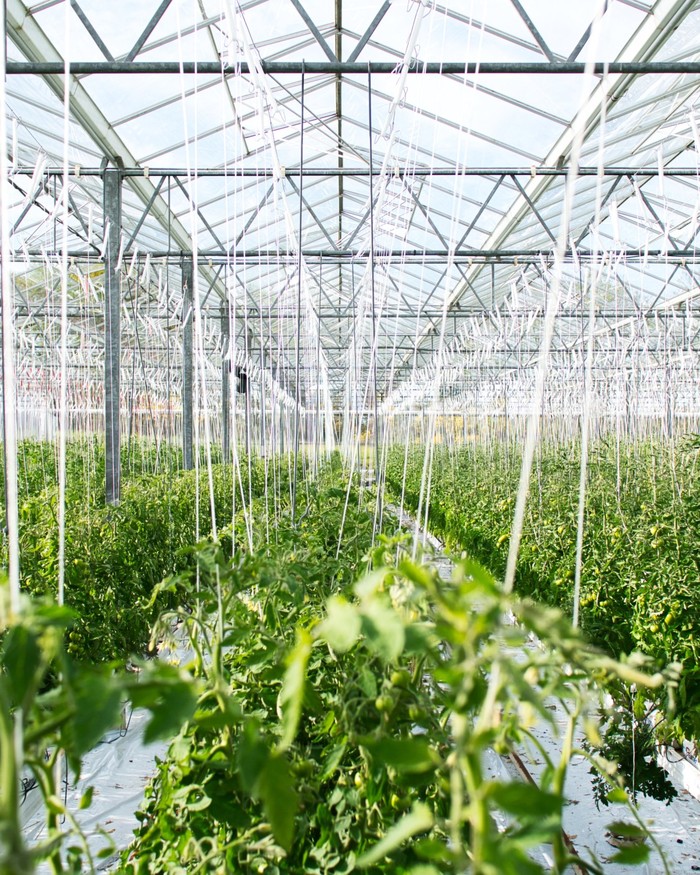
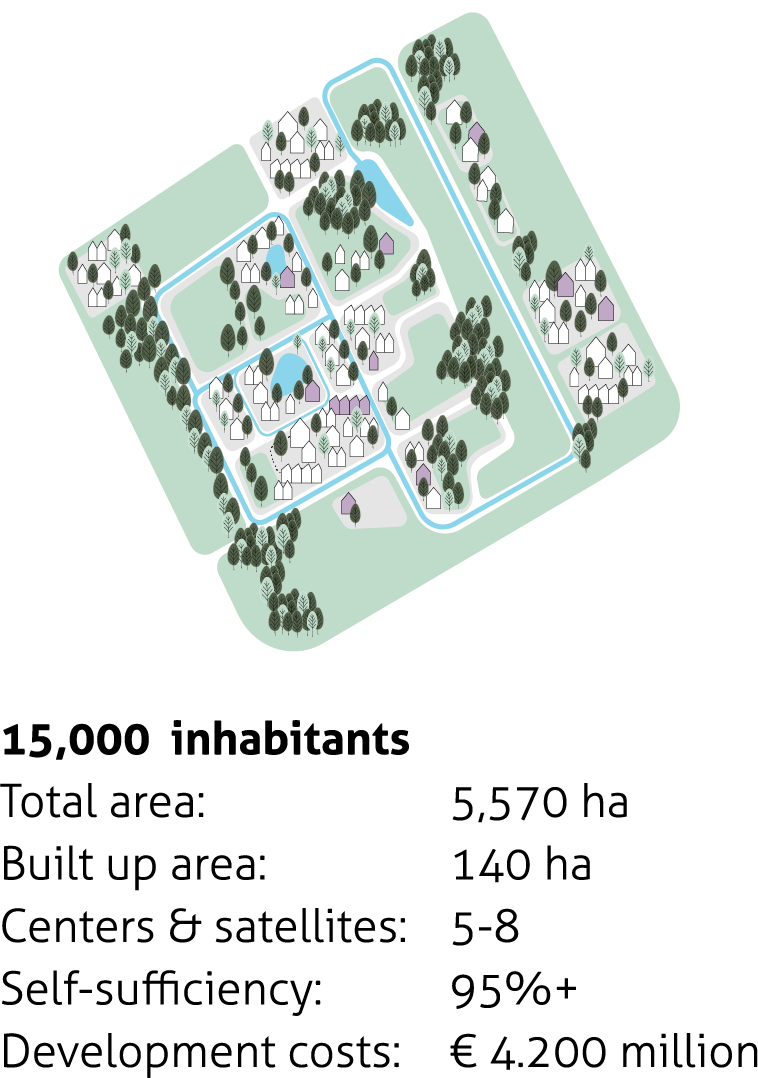
Room for people and the living world at once. In the Netherlands design, 80% of the land goes to farming and 12% to wild nature, biodiversity returns in full, hundreds of beehives work the fields, and every generation lives within walking distance of daily life. People and the land recover together, not at each other's expense.
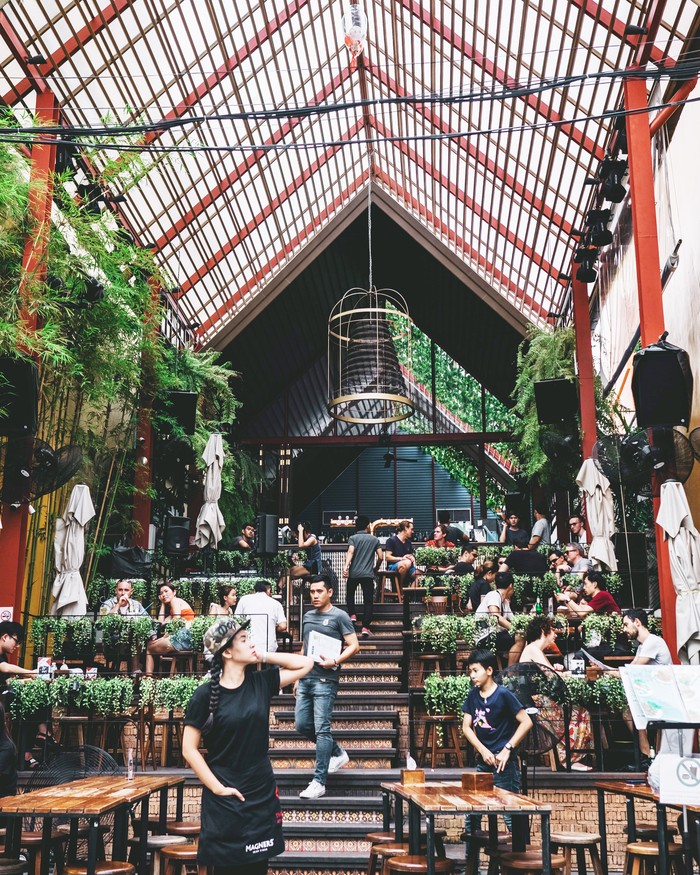
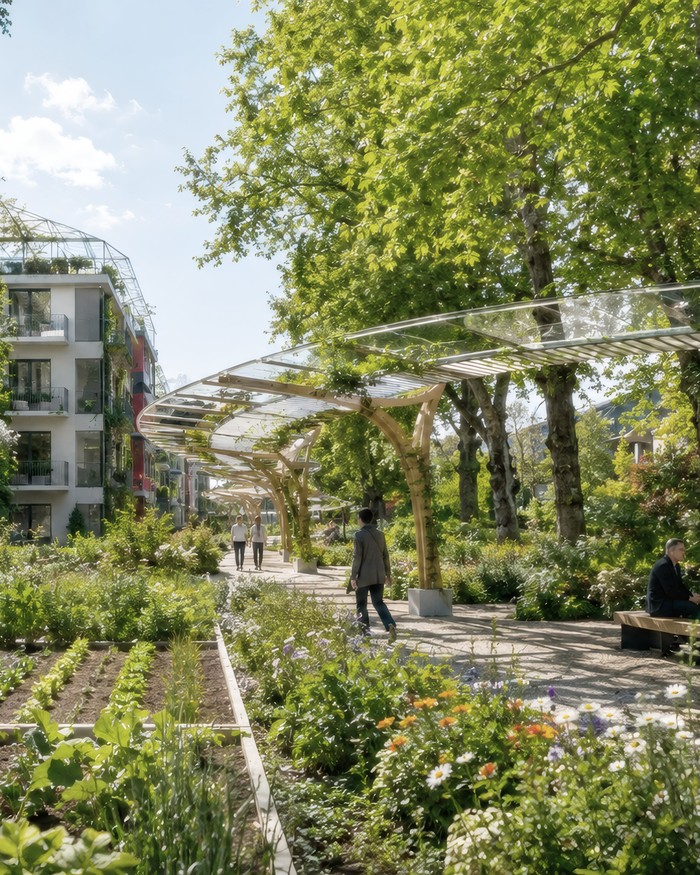
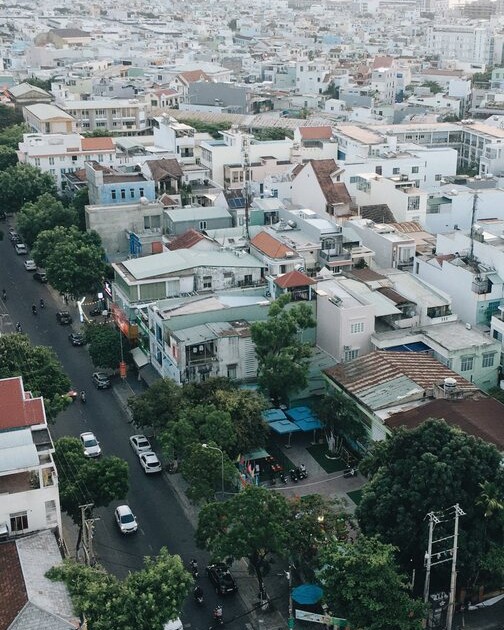
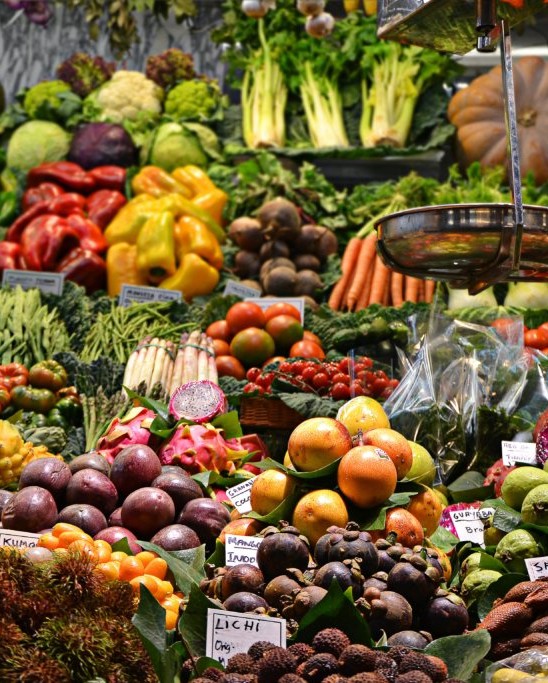
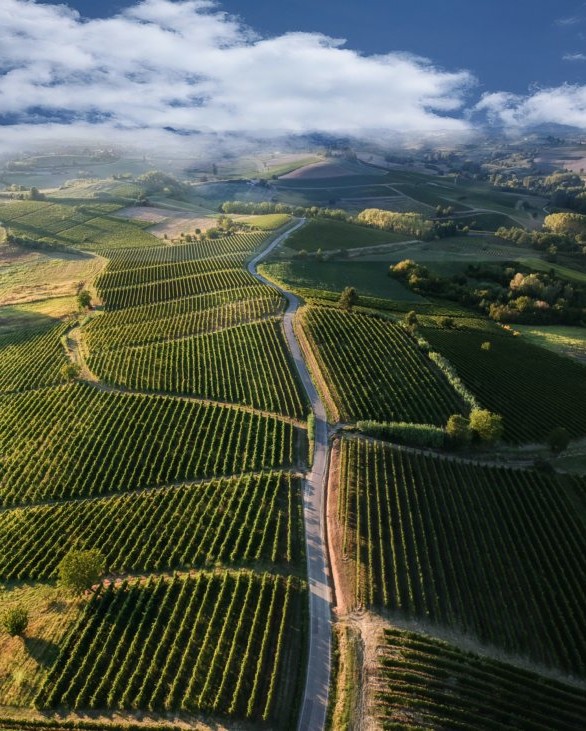
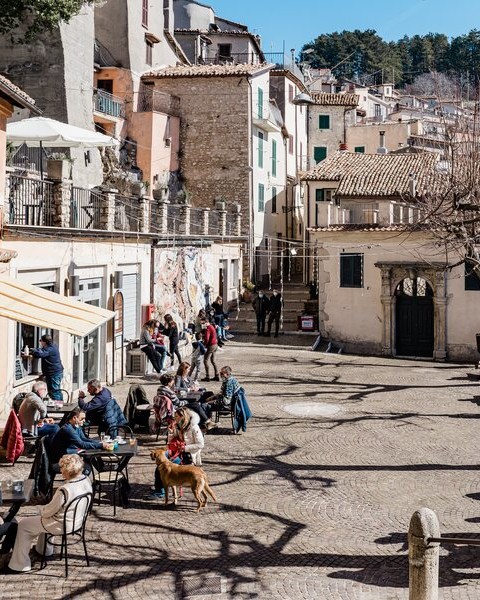
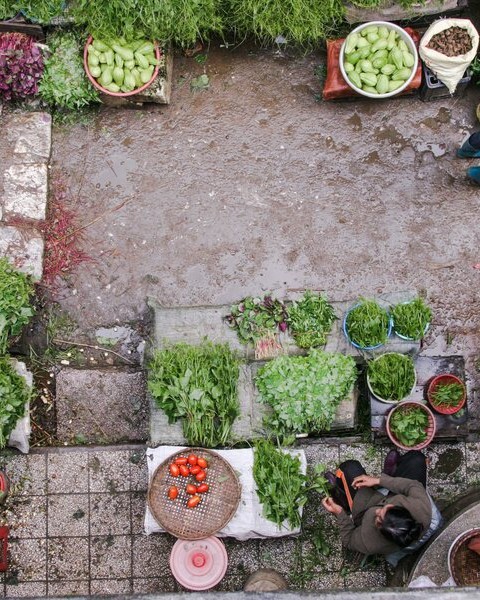
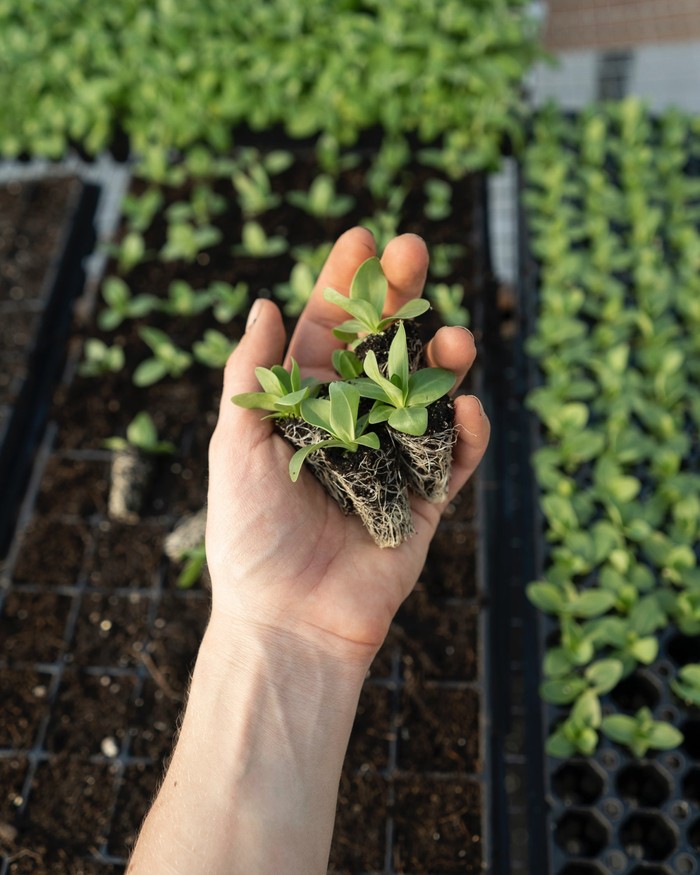
What a single Orchid City delivers.
Per Orchid City of 15,000 residents. Figures grow with size.
Except Integrated Sustainability, and twenty-five years of practice.
The research is done. More than 25 partners are in place, and the blueprints are drawn.
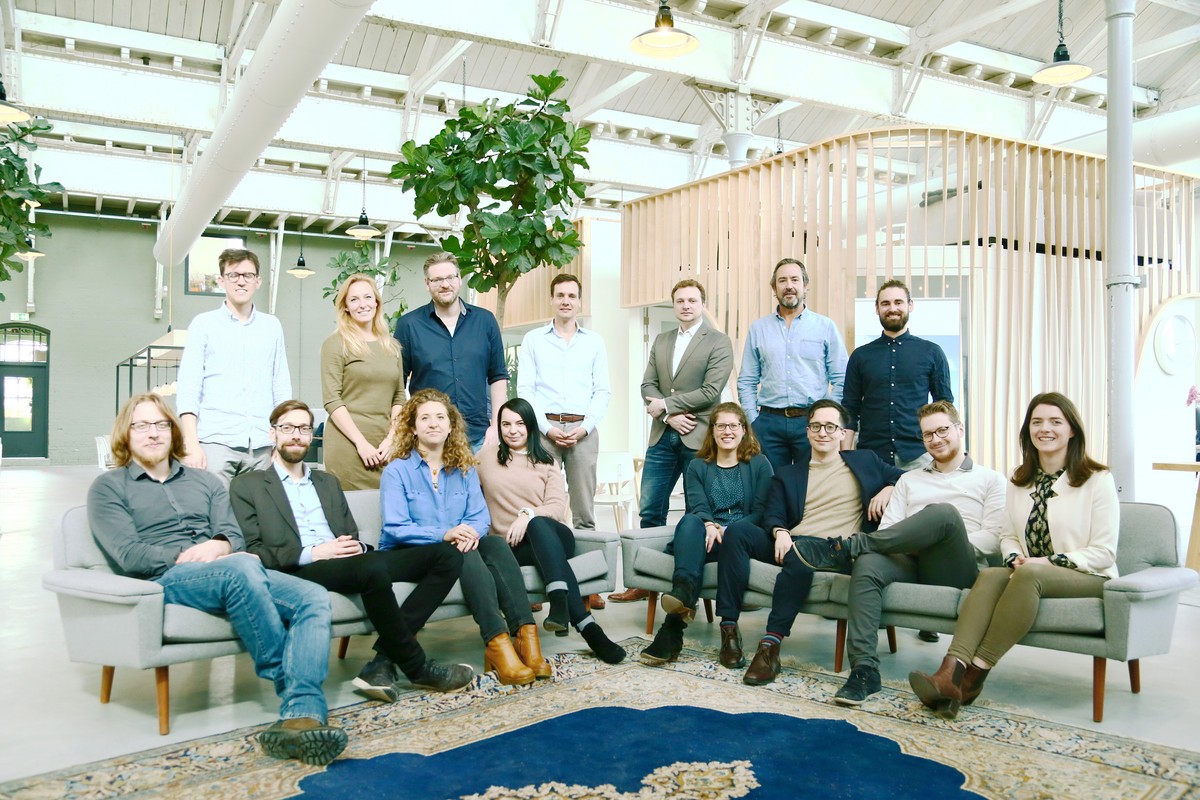
Orchid City is the work of Except Integrated Sustainability, a B-Corp certified since 2019, with offices in the Netherlands and Vietnam. Over twenty-five years, Except has delivered more than 600 projects across six continents, in energy, water, food, finance, architecture, and public policy.
SiD came out of that practice, and so did Orchid City. Around it sits a network of more than 25 partners across architecture, engineering, energy, finance, and government. None of this is a thought experiment. The method is proven, the blueprints are drawn, and the people who can build them are already at the table.
Built to grow, piece by piece.
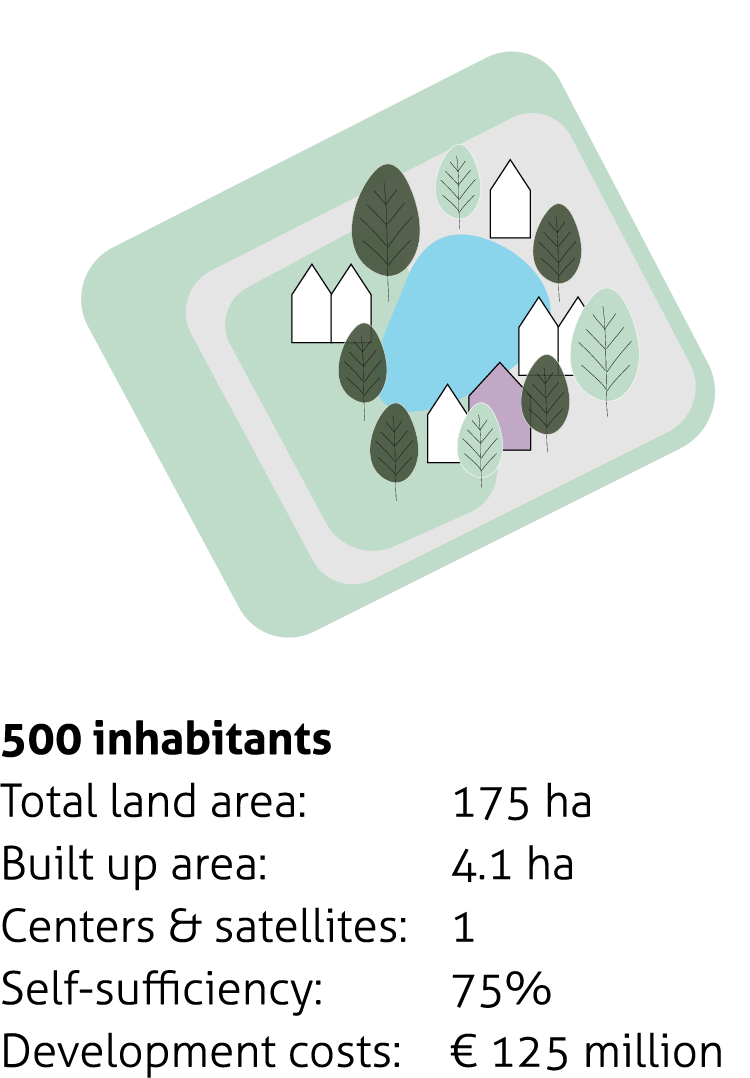
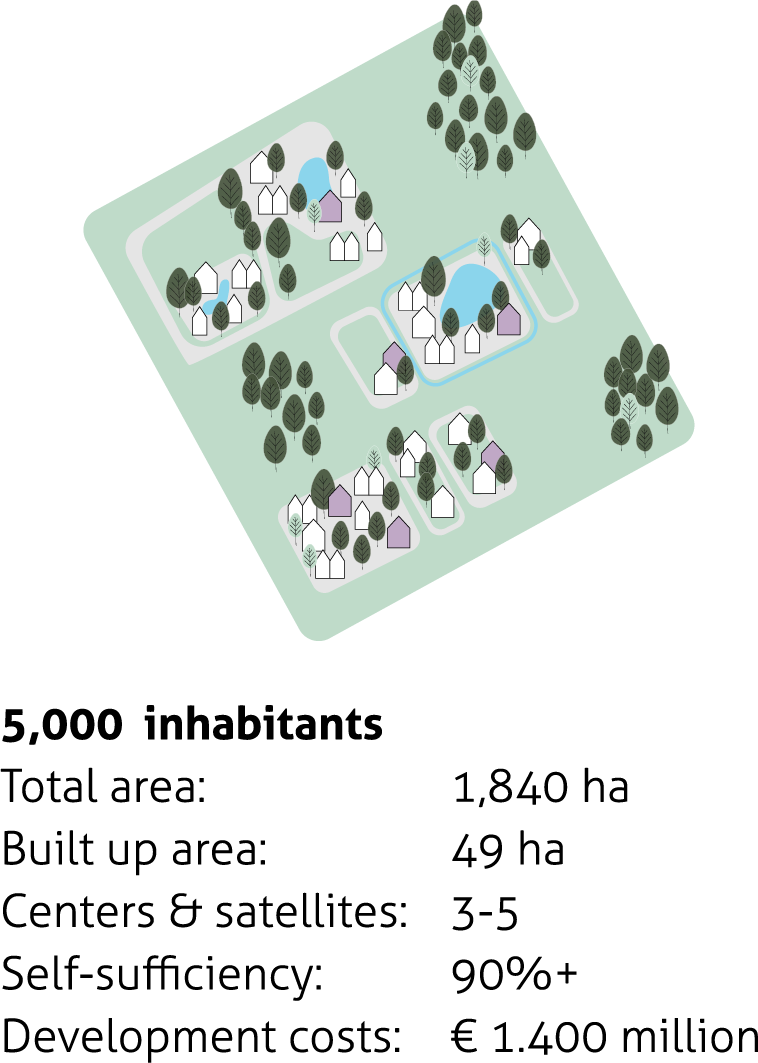
The first one needs a place to be built.
A regenerative city can be built. What remains is choosing where the first one goes, and who builds it.