Put capital behind cities that earn their place.
A regenerative city produces its own energy, water, food, and work. That makes it a resilient, future-proof asset, durable through shocks that strand conventional developments.
An asset built to last.
A city that makes what it needs does not depend on the things that fail first.
Conventional developments rely on supply chains they do not control. Energy, water, and food arrive from elsewhere, and value depends on conditions staying stable. An Orchid City produces these essentials on site. When the climate, the economy, or a supply chain falters, it keeps running.
That resilience is the asset. A city that absorbs shocks holds its value through events that strand developments built the usual way. The city protects its value by how it is built, not by the insurance it buys.
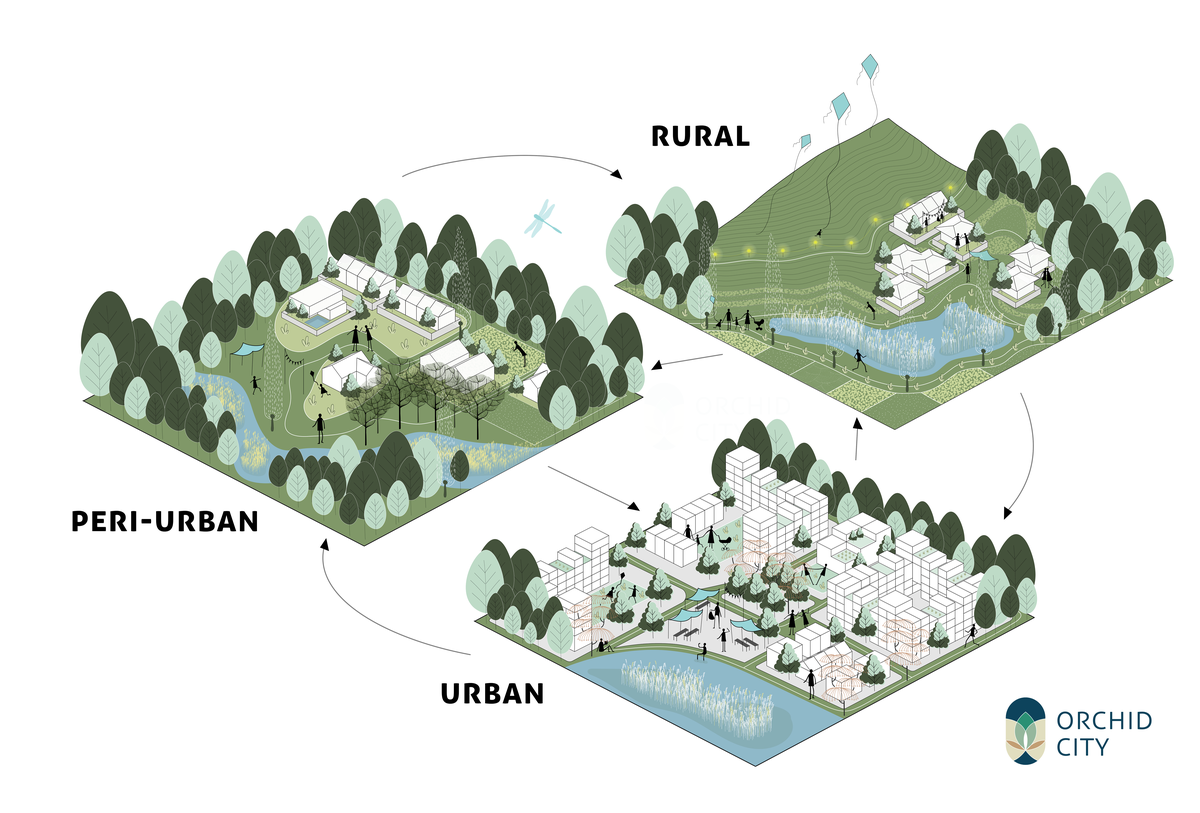
An asset designed to appreciate as the place around it heals.
Regeneration you can measure.
Per Orchid City of 15,000 residents. Figures grow with size. These are impact measures.
Align capital with real regeneration.
Impact here is not a label. Carbon, biodiversity, jobs, and affordability are designed into the city and measured against a baseline. An Orchid City captures more carbon than it emits, restores biodiversity in full, creates work inside its own bounds, and houses every generation. The good it does can be counted.
This is capital placed behind cities that earn their place: durable assets that produce their own essentials and leave the land and the community better than they found them.

Back the first one.
The research is done, the partners are in place, and the proof is ready. What is left is a place to build the first one.